Augusta University
 AU Online
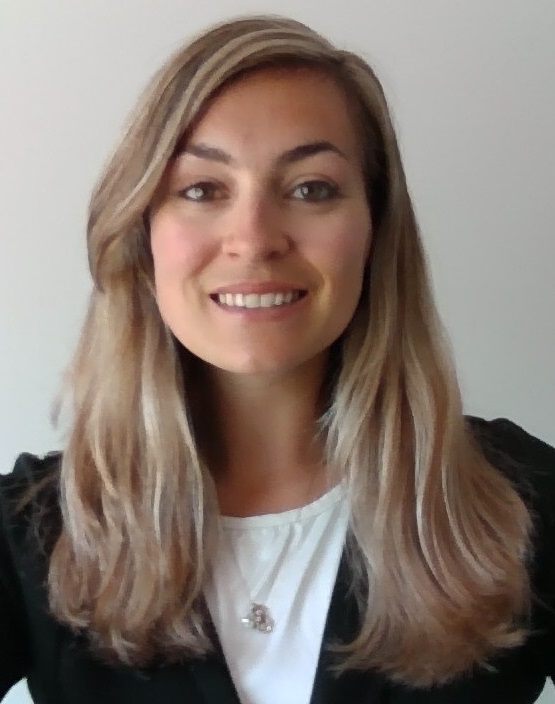
Movement has long been a major theme in Dr. Deborah Jehu’s life. A natural and enthusiastic athlete, she was a varsity wrestler in high school. Though she’d eventually earn her PhD in Human Kinetics in 2017, she wasn’t entirely sure what to do with that passion at first.
“I’m a first-generation student so I didn’t really go into university knowing exactly what I wanted to do,” Jehu remembers. “I just knew I wasn’t done with school when I was in high school.”
However, after getting involved in a randomized control trial on balance and exercise in older adults as an undergraduate university student, Jehu discovered that she wanted to learn everything she could about movement and use that expertise to help a particularly vulnerable group.
“I fell in love with exercise and movement science so I applied for a master’s degree in kinesiology. I really got to learn a lot more about falls, balance, and older adults,” she said. “Actually, that summer I was a caregiver for an older gentleman who had Parkinson’s disease and he fell almost daily.”
Since then, Jehu has been unyielding in her quest to learn how exercise can help older adults maintain or improve mobility and refine the tools that practitioners use to assess fall risk. In pursuit of this goal, she’s lectured in France and Canada, conducted fall-related research in Hong Kong, and managed a U.S. Department of Defense-funded project on concussion therapy in Oregon.
Along the way, though, Jehu hasn’t just sharpened her clinical expertise. She’s also become well-versed in the art of building bridges between researchers, practitioners, and policymakers, a talent she shares in Augusta University Online’s Master of Public Health (MPH) program.
Exercise as Medicine for Older Adults Living With Dementia
As Jehu points out, “Exercise is medicine.” There is mounting research indicating that regular exercise can improve everything from blood circulation to cognitive function. In some cases, healthcare providers can prescribe exercise just as they would medication.
However, Jehu says there are some glaring gaps in the current research — gaps she’s worked hard to close.
The Gap
“For so many years, people living with dementia were systematically excluded from exercise interventions because they cannot consent on their own,” Jehu said. “They need to have a legally authorized representative to consent for them.”
However, even if researchers can vault that obstacle, she said that’s only the beginning.
“Also, if you’re leading an exercise intervention, every single exercise session needs to be led by a health care provider who knows how to work with that population in residential care settings, or a caregiver at home who has been trained, which means that the project is a lot more expensive and resource-intensive.”
Those barriers didn’t prevent Jehu from diving in headfirst.
The Study
In 2025, Jehu and her colleagues published the results of a six-month pilot randomized controlled trial on the effects of exercise on executive function, posture, gait, and other metrics among people living with dementia. They established that exercise can improve executive function, functional mobility, and dual-tasking among this group.
This work is an important step in designing safe and effective exercise programs tailored to older adults living with dementia. Just as important, it provides hard evidence to healthcare decision-makers that exercise programs can be both clinically effective and worth the investment.
Refining Fall Risk Assessments: A Practice in Detail-Oriented Research
Falls are a leading cause of injury and death in older adults. As such, medical practitioners have many tools they can use to determine an older patient’s fall risk. Aside from exercise, refining and validating these tools is one of Jehu’s areas of expertise.
“We’ve published work on the reliability and responsiveness of certain fall risk assessments like, for example, the Berg Balance Scale,” Jehu said.
The Berg Balance Scale (BBS) is a widely used assessment made up of 14 movements, such as turning in a circle and standing on one leg. It’s often used to assess older adults who’ve suffered a stroke. However, Jehu and her colleagues discovered that it’s not particularly useful for assessing those who’ve had a total knee replacement.
They administered the BBS to participants at different stages throughout their recovery. Participants did too consistently well on it for the scores to tell clinicians anything important. Jehu said this kind of information is crucial for practitioners to have.
“When an older adult goes to see their provider, you just can’t spend two or three hours assessing all of these things. A provider just doesn’t have that time,” she said. “If we can refine our assessments and figure out the most important ones, then that will make the screening process a lot faster and more accurate.”
Bridging the Gap Between Research and Practice
Conducting clinical research is only one step in developing medical interventions and refining assessment tools. Getting that data to practitioners, patients and policymakers is the next step. That’s yet another one of Jehu’s areas of expertise.
“Every time I go into a residential care facility and start a new project, I always do a talk for the staff as well as the residents and their families,” she said. “After we talk about fall prevention and where we’re at with that, I say, ‘Here’s what we’re doing in the lab. Does anybody wish to participate in our ongoing studies?’”
Fortunately, Jehu has plenty of opportunities to share her approach to real-world research implementation with students. She’s currently on the faculty advisory committee for the Augusta University Center for Undergraduate Research and Scholarship.
“I try to open up opportunities for them, whether it’s suggesting that they go to some professional development event or supporting them in applying for graduate school,” she said. “If they want to work in a residential care facility, I’ll include them in important planning meetings with the leadership at those sites so they get to network.”
In AU Online’s MPH program, Jehu shares these insights through a class she teaches on public health. This gives rising health care policymakers the unique experience of learning how to improve wellness on a population level from someone with both clinical research and patient care experience.
To find out more about the MPH program, other members of Augusta University’s stellar faculty and the curriculum, request more information today.
Recommended Readings
12 Public Health Career Paths
How to Advance Your Skills in Public Health
What Does a Public Health Administrator Do?